

In today’s highly competitive industrial environment, efficiency, accuracy, and energy conservation are essential for achieving success. A key technology driving these enhancements is the VFD (Variable Frequency Drive). Used extensively across multiple industries, this is essential for regulating motor speed, reducing energy consumption, and enhancing overall efficiency.
Firms such as NCS Automations are helping industries adopt advanced automation by offering dependable systems specifically designed for manufacturing applications.
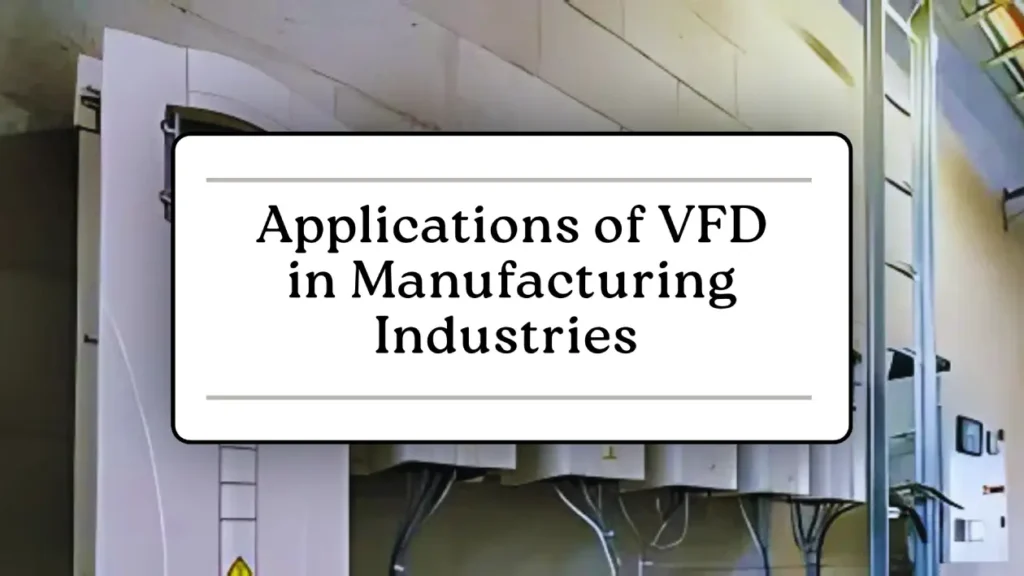
This article offers a detailed look at how VFDs are used in manufacturing industries, highlighting their advantages and significance.
1. What is a VFD?
This is an electronic device that regulates the speed and torque of electric motors by adjusting the input frequency and voltage. Rather than operating motors at maximum speed all the time, this enables accurate control tailored to specific operational needs.
This adaptability is a vital element in contemporary manufacturing, where efficiency and control are paramount.
2. Role of VFDs in Manufacturing
Manufacturing sectors depend significantly on electric motors to power processes like conveying, cutting, pumping, and air circulation. If not properly controlled, these motors may use too much energy and lead to deterioration.
Using a VFD provides:
- Regulated motor speed
- Extended machine durability
- Better process management
- Lowered energy usage
3. Main Uses of VFD in Manufacturing Sectors
a) Conveyor systems
They are commonly utilized in manufacturing facilities for the transportation of materials. That enables operators to adjust the speed of conveyors according to production needs.
Benefits:
- Smooth start and stop Reduced mechanical stress
- Better synchronization with production lines
b) Pumping Systems
Pumps are essential in industries such as chemicals, food processing, and water treatment. A VFD (Variable Frequency Drive) modifies the pump speed based on demand, preventing excessive energy use.
- Uses water distribution systems.
- Chemical manufacturing facilities, Cooling systems,
c) HVAC systems
which stands for Heating, Ventilation, and Air Conditioning, necessitates accurate regulation of airflow. This helps regulate fan and compressor speeds efficiently.
Advantages:
- Energy savings
- Consistent temperature control
- Reduced operational costs
d) CNC machines
CNC (Computer Numerical Control) machines demand a high level of accuracy. A VFD (Variable Frequency Drive) guarantees precise control of motor speed, which is essential for cutting and shaping materials.
Advantages:
- Enhanced precision
- Decreased vibration
- Superior surface quality
e) Packaging Machinery
In the packaging sector, it is crucial to maintain a steady pace. This, like NCS Automations, enables smooth control of motors utilized in machines for filling, sealing, and labeling.
Benefits:
- Enhanced productivity
- Decreased material waste
- Improved coordination
f) Uses in the textile industry
For spinning, weaving, and dyeing, the textile industry uses a lot of motors. This helps control speed based on the needs of the fabric.
Benefits:
- Better quality of products
- Efficiency of energy
- Less wear and tear on machines
g) Systems for Compressors
Manufacturing plants use air compressors a lot. This controls the speed of a compressor based on how much air is needed, which saves energy.
Uses:
- Systems that use air
- Air supply for factories
h) Operations for Mixing and Blending
Mixers and blenders are used in industries like food processing, pharmaceuticals, and chemicals. That makes sure that you have exact control over the speed of mixing.
Benefits:
- Consistent quality of products
- Flexibility in the process
- Less energy use
i) Lifts and Cranes
Heavy lifting tools need to be able to speed up and slow down in a controlled way. This makes sure that everything runs smoothly and safely.
Advantages:
- Reduced mechanical stress
- Enhanced safety
- Precise load handling
j) Printing and Paper Industry
In the printing and paper industry, it is really important to have speed. A VFD helps the machines run at the desired speed.
The benefits of using this in the printing and paper industry are many.
Benefits:
- High-quality products
- Fewer mistakes
- The work gets done faster
- This also helps save energy
One of the things about using this is that it saves energy. Old motors run at speed all the time, even when they do not need to.
A VFD does things.
- It uses power
- It does not waste energy
- It lowers your electricity bills
This makes it a good choice for companies because it is good for the earth, and it saves money.
4. The benefits of using a VFD when making things are the following:
1. You pay less for energy.
The VFD can really cut down on how much electricity you use.
2. You can control the process better
When you can control the speed, the products are better.
3. The machines last longer
When the machines run smoothly, they do not break easily.
4. You do not have to spend much on maintenance
When the machines are not stressed, they do not break down as much.
5. It is safer
When the machines start and stop slowly, it is safer for everyone.
5. How to Choose the Right VFD
To choose the right VFD, you have to think about a few things:
- How powerful the motor is. What voltage is used
- What kind of work are you doing
- What the load is like
- What the environment is like
If you work with a company, like NCS Automations, that has a lot of experience, they can help you find the VFD (Variable Frequency Drive) for your specific needs.
6. The future of VFD in manufacturing
As Industry 4.0 and smart factories grow, the role of this is becoming even more important. Integration with automation systems, the Internet of Things (IoT), and data analytics is making things run more smoothly and helping people make better decisions.
Future trends are:
- Those are systems that are smart
- Monitoring from a distance
- Maintenance that can be predicted
7. Why NCS Automations is the Best Choice for VFD Solutions
NCS Automations is a well-known name in industrial automation. They offer high-quality VFD (Variable Frequency Drive) solutions that are made for manufacturing industries.
Main strengths:
- Products that work
- Technical support from experts
- Solutions made just for you
- Pricing that is competitive.
Conclusion
The VFD (Variable Frequency Drive) is now a necessary part of modern manufacturing because it offers the best control, efficiency, and cost savings. It can be used in many ways, from conveyor systems to CNC machines.
Manufacturers can boost productivity, cut costs, and stay competitive by using that technology. Manufacturers can improve productivity, reduce operational costs, and stay competitive in today’s market. Partnering with experienced companies like NCS Automations ensures successful integration and long-term benefits.
FAQs – VFD
1. What is a VFD, and why is it used in manufacturing industries?
This controls motor speed and helps improve efficiency while reducing energy consumption in manufacturing processes.
2. How does a VFD save energy in industrial applications?
A VFD adjusts motor speed based on demand, preventing unnecessary power usage and lowering electricity costs.
3. Where is VFD commonly used in manufacturing industries?
VFD is widely used in conveyors, pumps, compressors, CNC machines, and HVAC systems.
4. What are the main benefits of using a VFD?
A VFD improves process control, reduces energy costs, increases equipment life, and enhances safety.
5. Why choose NCS Automations for VFD solutions?
NCS Automations provides reliable, efficient, and customized VFD solutions for industrial needs.