

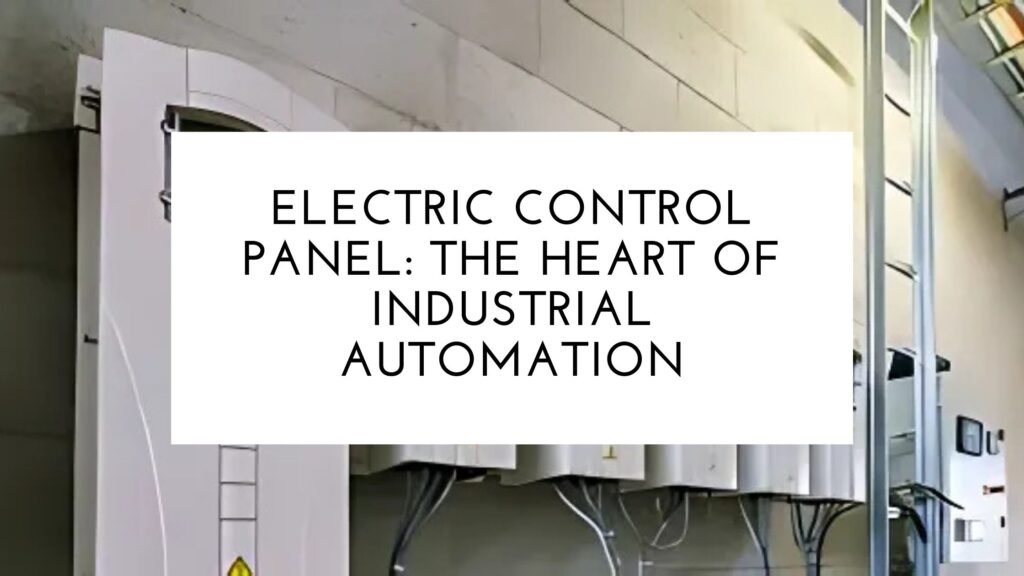
In industrial and commercial setups, reliable and efficient control of electrical systems is essential for smooth operations, safety, and energy management. An Electric Control Panel is the central unit that manages and monitors the electrical equipment of machines, processes, or entire facilities. Whether you are running manufacturing units, packaging lines, or process industries, a well-designed control panel ensures safety, precision, and uninterrupted performance.
What Is an Electric Control Panel?
An Electric Control Panel is an assembly of electrical devices such as circuit breakers, relays, contactors, switches, and programmable logic controllers (PLCs). It controls the distribution of electricity, manages machine operations, and protects electrical circuits from overloads or faults.
Key Components of a Control Panel:
- Main switch / Circuit breaker
- Contactor & overload relay
- PLC / Microcontroller
- HMI (Human-Machine Interface)
- Power supply units
- Fuses and protective devices
Types of Electric Control Panels
- Manual Control Panel – Operated manually with switches and buttons; simple and cost-effective.
- Automatic Control Panel – Equipped with PLCs or microcontrollers for automated operations.
- Motor Control Panel (MCC) – Specifically designed to control motors and related operations.
- Distribution Panel – Manages and distributes power to multiple circuits safely.
Benefits of Electric Control Panels
1. Centralized Control
Control panels allow operators to manage multiple machines or circuits from one location, improving operational efficiency.
2. Safety & Protection
Built-in circuit breakers, overload protection, and fuses safeguard machines and operators from electrical hazards.
3. Automation & Efficiency
With PLC integration, control panels enable automated processes, reducing manual intervention and human errors.
4. Energy Management
Modern panels help monitor power consumption, optimize energy usage, and reduce electricity costs.
5. Easy Maintenance
Structured wiring, labeled circuits, and modular components make troubleshooting and maintenance easier.
Applications of Electric Control Panels
- Industrial Automation: CNC machines, packaging lines, conveyor systems
- Process Industries: Chemical, pharmaceutical, and food processing
- HVAC Systems: Managing air conditioning and ventilation in commercial buildings
- Water Treatment Plants: Pump control and process monitoring
- Renewable Energy Systems: Solar and wind power distribution
A well-designed control panel ensures reliable operations, operational safety, and improved productivity.
Why Choose a Quality Electric Control Panel
- Customized designs for specific industrial needs
- Compliance with safety standards and certifications
- Durable components for long-term performance
- Seamless integration with PLCs, HMIs, and VFDs
- Expert technical support and after-sales service
Conclusion
Welcome to NCS Automations, a trusted name in industrial automation solutions, committed to powering progress through smart technology and dependable service. An Electric Control Panel is the backbone of industrial and commercial automation systems. From motor control to process automation, it ensures safety, reliability, and efficiency. Investing in a high-quality control panel is critical for continuous production, reduced downtime, and energy optimization.
📞 Looking for custom electric control panels for your industry? Contact our team for expert consultation and supply.