

Introduction
In today’s industrial and commercial environments, efficient control of electrical systems is essential for safety, productivity, and operational reliability. From manufacturing plants and infrastructure projects to automations systems and commercial buildings, Electric Control Panels act as the brain of electrical operations.
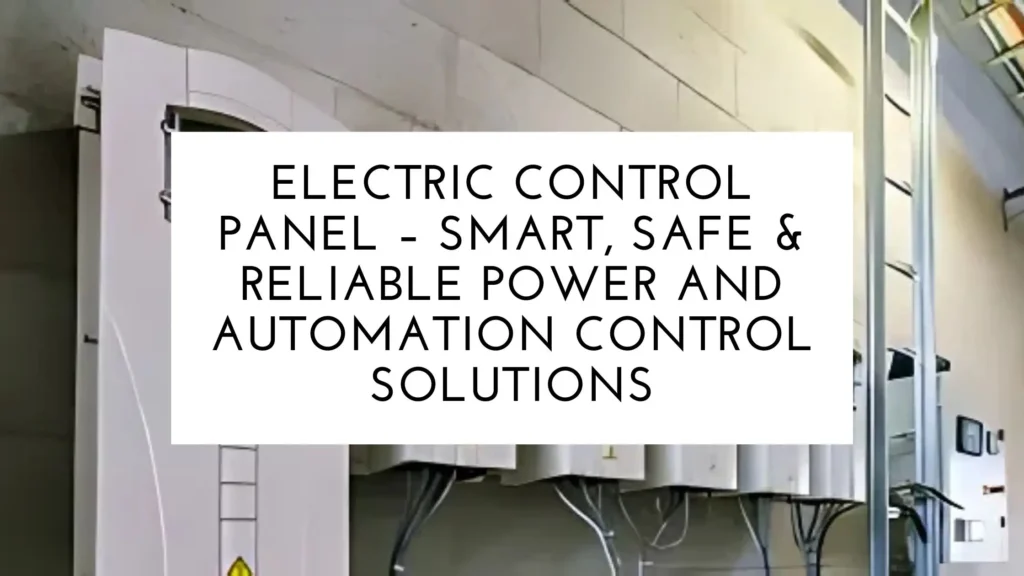
An electric control panel manages, monitors, and protects electrical equipment while ensuring smooth power distribution and process automation. NCS Automations, a trusted name in industrial automation and electrical solutions, designs and supplies high-quality electric control panels that meet modern industry requirements for performance, safety, and durability. This blog provides a detailed overview of electric control panels, their types, features, applications, and why NCS Automation is a reliable partner for control panel solutions.
What Is an Electric Control Panel?
An electric control panel is an enclosure that houses electrical components such as circuit breakers, contactors, relays, PLCs, drives, meters, and switches. These components work together to control electrical power distribution and automation processes.
The primary functions of an electric control panel include:
- Power distribution
- Equipment control
- Process automation
- Electrical protection
- Monitoring and diagnostics
Control panels are designed according to specific application requirements, safety standards, and operational conditions.
Importance of Electric Control Panels in Modern Industry
Electric control panels play a critical role in ensuring:
- Safe operation of machinery and equipment
- Accurate control of industrial processes
- Protection against overloads, short circuits, and faults
- Energy efficiency and reduced downtime
A well-designed control panel improves system reliability, enhances productivity, and ensures compliance with electrical safety regulations.
Types of Electric Control Panels by NCS Automations
As an experienced control panel solution provider, NCS Automations offers a wide range of electric control panels for various industrial and commercial needs:
🔹 Power Control Panels (PCC)
Power Control Panels are used for controlling and distributing electrical power to heavy machinery and equipment.
Applications:
- Manufacturing plants
- Industrial utilities
- Power distribution systems
🔹 Motor Control Panels (MCC)
Motor Control Panels manage and protect electric motors used in industrial processes.
Features:
- Overload and short-circuit protection
- Efficient motor operation
- Reduced energy consumption
Applications:
- Pumps
- Compressors
- Conveyors
- HVAC systems
🔹 PLC Control Panels
PLC control panels use programmable logic controllers to automate industrial processes.
Applications:
- Automation systems
- Assembly lines
- Process control industries
🔹 VFD Control Panels
VFD (Variable Frequency Drive) control panels regulate motor speed and torque, improving energy efficiency.
Applications:
- Fans and blowers
- Pumps
- Elevators
- Material handling systems
🔹 Automation Control Panels
These panels integrate PLCs, HMIs, sensors, and drives to manage complex automated systems.
Applications:
- Smart factories
- Robotics
- Packaging machines
- Process industries
🔹 Distribution Control Panels
Used for safe distribution of electrical power across facilities.
Applications:
- Commercial buildings
- Data centers
- Infrastructure projects
Components Used in Electric Control Panels
NCS Automations uses high-quality components to ensure reliable performance:
- Circuit breakers (MCB, MCCB, ACB)
- Contactors and relays
- PLCs and I/O modules
- Variable frequency drives (VFDs)
- HMI touch panels
- Power supplies and transformers
- Wiring accessories and terminal blocks
Each component is carefully selected based on application and load requirements.
Manufacturing Process & Quality Standards
1. Design & Engineering
Panels are designed using detailed electrical drawings and load calculations to meet customer specifications.
2. Panel Fabrication
High-quality enclosures are fabricated with proper ventilation, protection rating, and layout planning.
3. Component Assembly
Components are mounted, wired, and labeled according to electrical standards.
4. Testing & Inspection
Panels undergo rigorous testing for insulation resistance, continuity, functionality, and safety compliance.
5. Dispatch & Installation Support
Panels are packed securely and delivered with technical documentation and support.
Key Features of Electric Control Panels by NCS Automations
✔ Robust & Safe Design
Panels are built to ensure operator safety and reliable system performance.
✔ High Efficiency
Optimized layouts and components help reduce power losses and improve energy efficiency.
✔ Easy Operation & Maintenance
Clear labeling, modular design, and accessibility simplify operation and maintenance.
✔ Custom-Built Solutions
Panels are customized to meet specific industrial processes and site conditions.
✔ Compliance with Standards
Designed as per relevant IS, IEC, and industry safety standards.
Applications of Electric Control Panels
Electric control panels supplied by NCS Automations are used across multiple sectors:
🏭 Manufacturing & Industrial Plants
For machinery control, process automation, and power management.
⚡ Power & Energy Sector
Used in substations, power plants, and renewable energy systems.
🏢 Commercial Buildings
HVAC control, lighting systems, and building automation.
🚰 Water & Wastewater Treatment
Control of pumps, motors, and treatment processes.
🛢 Oil & Gas & Process Industries
Safe and reliable control of critical equipment and processes.
🏗 Infrastructure Projects
Airports, metro rail, hospitals, and smart city projects.
Why Choose NCS Automations for Electric Control Panels?
⭐ Strong Technical Expertise
NCS Automations has deep knowledge of industrial automation and electrical systems.
⚙ Customized Panel Solutions
Panels are designed and manufactured as per customer-specific requirements.
🔧 Quality Components
Use of branded and tested electrical components ensures long service life.
🧪 Strict Testing & Quality Control
Every panel is tested before dispatch to ensure safety and reliability.
🚚 Timely Delivery & Support
Reliable project execution with on-time delivery and technical assistance.
🤝 Customer-Focused Approach
Dedicated support from design to commissioning ensures customer satisfaction.
Benefits of High-Quality Electric Control Panels
- Improved operational safety
- Reduced equipment downtime
- Better energy management
- Accurate and reliable control
- Easy troubleshooting and maintenance
- Scalability for future expansion
Selecting the Right Electric Control Panel
When choosing an electric control panel, consider:
- Load and power requirements
- Type of equipment being controlled
- Environmental conditions
- Level of automation needed
- Safety and compliance requirements
NCS Automations assists clients in selecting the most suitable panel configuration.
Future Trends in Electric Control Panels
With Industry 4.0 and smart manufacturing, control panels are evolving with:
- IoT integration
- Smart monitoring and diagnostics
- Energy-efficient components
- Compact and modular designs
NCS Automations continues to adopt these advancements to deliver future-ready solutions.
Conclusion
Electric control panels are the backbone of industrial and commercial electrical systems, ensuring safe power distribution and precise automation control. The quality of a control panel directly impacts system reliability, safety, and efficiency.
NCS Automations is a trusted provider of electric control panels, offering robust, customized, and standards-compliant solutions for diverse industries. With strong engineering expertise, quality components, and customer-focused service, NCS Automation delivers control panels that support long-term operational success.