

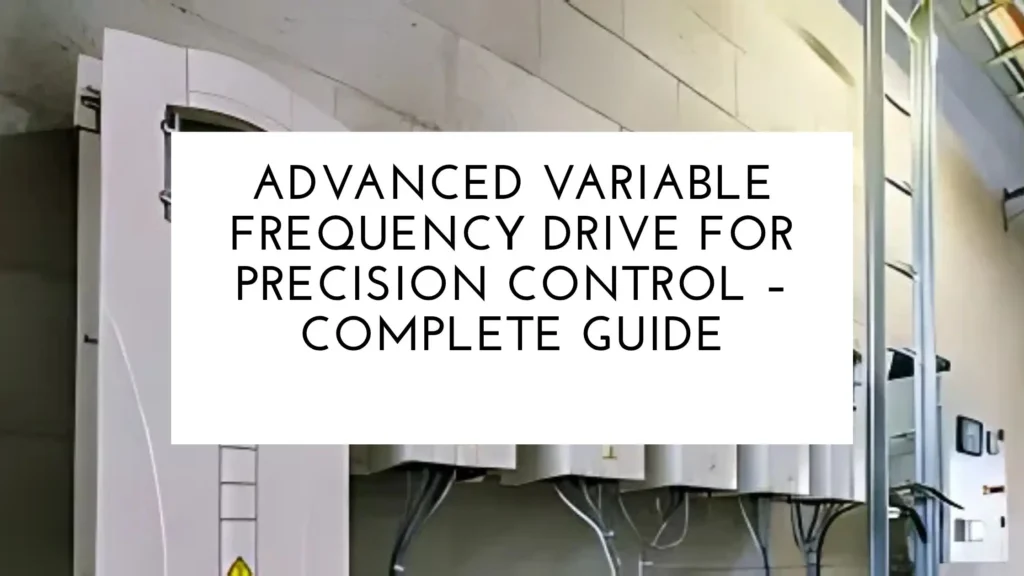
In today’s modern industrial landscape, precision, efficiency, and energy savings are critical for maintaining competitiveness. One of the most important technologies enabling this transformation is the Advanced Variable Frequency Drive (VFD). Widely used in industries such as manufacturing, HVAC, water treatment, and automation, VFDs provide precise control over motor speed and torque, resulting in improved performance and reduced energy consumption.
This comprehensive guide explores advanced VFDs, their working principles, benefits, applications, and how to choose the right solution for precision control.
What is a Variable Frequency Drive (VFD)?
A Variable Frequency Drive (VFD) is an electronic device used to control the speed and torque of an electric motor by varying the frequency and voltage of its power supply.
Unlike traditional motor systems that operate at a constant speed, VFDs allow motors to run at variable speeds, enabling better control and efficiency in industrial processes.
How Does a VFD Work?
A VFD operates in three main stages:
Rectifier Stage
Converts incoming AC power into DC power.
DC Bus
Stores and smooths the DC power using capacitors.
Inverter Stage
Converts DC power back into AC power with variable frequency and voltage.
By adjusting the frequency, the VFD controls the motor speed with high precision.
Importance of Advanced VFDs in Precision Control
Advanced VFDs go beyond basic speed control by offering intelligent features and enhanced performance.
Key Benefits:
Precise Speed Control
Enables accurate control of motor speed based on application requirements.
Energy Efficiency
Reduces energy consumption by matching motor speed to load demand.
Smooth Operation
Eliminates sudden starts and stops, reducing mechanical stress.
Extended Equipment Life
Minimizes wear and tear on motors and connected machinery.
Reduced Maintenance Costs
Lower stress leads to fewer breakdowns and maintenance needs.
Key Features of Advanced VFDs
Modern VFDs are equipped with advanced technologies for improved performance:
- Sensorless vector control for high accuracy
- Built-in PLC functionality
- Real-time monitoring and diagnostics
- Overload and fault protection
- Communication protocols (Modbus, Profibus, Ethernet/IP)
- Energy-saving modes
These features make VFDs essential for high-performance industrial applications.
Applications of VFDs in Industrial Automation
HVAC Systems
Control fans, pumps, and compressors for energy-efficient climate control.
Manufacturing Units
Used in conveyors, mixers, and machine tools for precise operation.
Water & Wastewater Treatment
Control pump speed to optimize water flow and pressure.
Textile Industry
Ensure consistent speed for spinning and weaving processes.
Oil & Gas Industry
Used in drilling, pumping, and refining operations.
Packaging Industry
Maintain synchronization and speed control in production lines.
Advantages of Using VFDs
Significant Energy Savings
VFDs can reduce energy consumption by up to 30–50% in certain applications.
Improved Process Control
Ensures consistent output and product quality.
Soft Start & Stop
Prevents electrical and mechanical shocks.
Reduced Noise Levels
Lower motor speed reduces operational noise.
Flexibility
Suitable for a wide range of applications and industries.
Advanced Control Techniques in VFDs
Scalar Control (V/F Control)
Basic method for controlling motor speed.
Vector Control
Provides precise torque and speed control.
Direct Torque Control (DTC)
Offers fast and accurate motor control without feedback devices.
These advanced control methods make VFDs ideal for precision-driven applications.
How to Choose the Right VFD
Selecting the right VFD is essential for optimal performance.
Consider the Following:
- Motor type and rating
- Application requirements
- Load characteristics
- Environmental conditions
- Communication and control features
- Energy efficiency ratings
Choosing the correct VFD ensures long-term reliability and cost savings.
Role of VFDs in Industry 4.0
With the rise of smart manufacturing, VFDs are becoming more intelligent and connected.
Modern VFDs offer:
- IoT integration
- Remote monitoring
- Predictive maintenance
- Data analytics for performance optimization
These features help industries achieve automation, efficiency, and sustainability.
Future Trends in VFD Technology
The future of VFDs is driven by innovation and digital transformation:
- AI-based motor control
- Cloud-connected drives
- Compact and modular designs
- Enhanced cybersecurity features
- Integration with renewable energy systems
These advancements will further enhance precision and efficiency in industrial operations.
Conclusion
Welcome to NCS Automations, a trusted name in industrial automation solutions Advanced Variable Frequency Drives are essential for achieving precision control, energy efficiency, and reliable performance in industrial automation. By enabling accurate motor speed and torque control, VFDs help industries improve productivity, reduce costs, and extend equipment life.
Whether you are operating a manufacturing unit, HVAC system, or water treatment plant, investing in the right VFD can significantly enhance your operational efficiency and long-term success.